

Elvis Aaron Presley was born on January 8, 1935 in a small house in Tupelo, Mississippi. Elvis grew up as an only child since his twin brother, Jessie Garon, was stillborn. In 1948, his family moved to Memphis, Tennessee.
Raised by working-class parents, Elvis' family, with little money, moved from place to place frequently.
He was deeply devoted to his mother, Gladys, and was raised to have a strong faith in God. He attended Church with his parents, where gospel music became an important influence for him.
Elvis received his first guitar as a gift from his mother on his 11th birthday, experiencing his first musical success a few years later by winning a talent contest at his High School in Memphis.
Elvis’ musical influences were the pop and country music of the time, the gospel music he heard in church and the fascination of black R&B on famous Beale Street as a teenager in Memphis.
After graduating in 1953, Elvis worked several jobs while pursuing his dream to become a singer. That year, at Sun Studio, he recorded his first demo. Before long, Sam Philips, the record label owner, took the young Elvis under his wing.
The early years
In 1954, Elvis started his singing career with the Sun Records label in Memphis. He soon began touring and recording, trying to catch his first break. It came with “That’s All Right” that year. RCA Victor bought his recording contract a year later.
By 1956, he was an international phenomenon. Elvis had a unique sound and style that introduced a whole new trend of American music to the world.
Elvis Presley's charismatic life story, from his humble beginnings through his rise to stardom, is a fascinating journey which has earned Elvis his undisputed title of the 'King of Rock ‘n’ Roll'. His songs are unforgettable, having stood the test of time, especially his singles of the 1950s.

Within two years of starting at RCA, Elvis was drafted into the U.S. Army, by which time he had already made 4 movies.
His music was always unpredictable. No-one knew what the next song would be like, especially since they were written by different songwriters, but Elvis liberally modified his style to suit each song. There were the early country-boy rockabillies sung in a breathless high pitch, for example ‘My Baby Left Me’, written and first recorded by Arthur Crudup in 1950 but placed by Elvis on the B-side of his single “I Want You, I Need You, I Love You”. Then there were the more mature, aggressive rock 'n' roll songs such as ‘Blue Suede Shoes’, written and first recorded by Carl Perkins in 1955. Elvis’ approach to ballads ranged from the sublime vocal effects on the guitar-tapping version of ‘Blue Moon’ to smooth crooning on ‘Can't Help Falling In Love’.
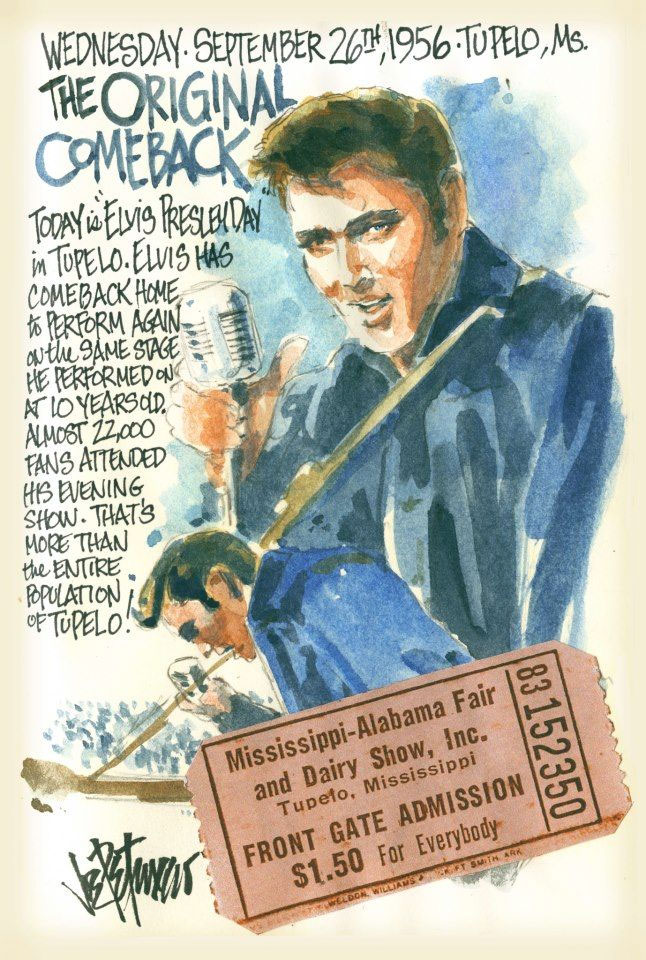
During 1956 & 1957, Ed Sullivan paid Elvis $50,000 for appearing on three of his shows, which was more money than any performer had ever been paid to appear on a network variety program. His first appearance was a phenomenal success with over 60 million people tuning into the show. When Elvis made his third appearance, Ed Sullivan told Elvis that his show had never had a better experience with a name act. On this very same appearance, Elvis was shown on camera from the waist up only, due to his perceived lewdness by the establishment, which became one of history's most memorable television moments.
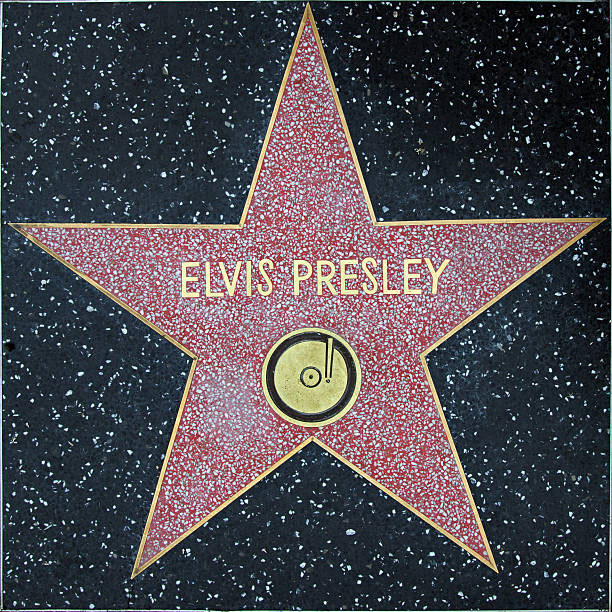
On February 9, 1960, Elvis’ star on the Hollywood Walk of Fame was unveiled but Elvis couldn’t attend the ceremony since he was still in Germany.
Elvis' next television appearance was in 1960, when he was paid $125,000 to appear on Frank Sinatra’s variety show to memorialise Elvis' return from the army.
68 Comeback
After seven years of making movies and being away from the stage, Elvis returned to live performance in a celebrated ’68 comeback television special concert. His concerns about being away from the music business and his involvement in producing low quality movies, was taking a toll on his happiness.
The ’68 Special concert was initially planned to be a Christmas special but director Steve Binder updated the concert to be cutting edge and to appeal to the younger generation. Elvis performed in an informal environment surrounded by his fans. The show aired to positive reviews and relaunched Elvis’ return to live performance.
The Vegas years
 The ’68 Comeback Special led to a long running Las Vegas concert residency and a series of profitable tours. In 1969, Elvis performed for a month at the International Hotel in Las Vegas. Backed by top musicians, and an audience adorned with Hollywood movie stars, opening night was a great success.
In 1970, Elvis made his first real-life documentary film, ‘Elvis: That’s The Way It Is’, which portrayed his return to live performances after a seven-year hiatus to focus on his acting.
In 1972, Elvis made his second real-life documentary film, ‘Elvis On Tour’, documenting his tour of 15 cities in the USA. Featuring 25 songs and backstage rehearsals, the documentary also included his performance on the Ed Sullivan show.
In 1973, Elvis staged his first concert broadcast globally via satellite, ‘Aloha from Hawaii’, seen by approximately 1.5 billion viewers, Colonel Parker, having been inspired the year before by Richard Nixon’s live broadcast of his visit to China.
On August 16, 1977, Elvis died at his Memphis home, Graceland, at the age of only 42. Two months after Elvis’s death, his third and final TV special was broadcast on CBS. It was filmed during Elvis’ final tour in the cities of Omaha, and Rapid City, in June 1977.
Known to everyone as ‘Elvis’, he remains one of the world’s most popular music icons and is respected as one of the most important figures of the twentieth century. His talent, good looks, sexuality, charisma, and good humour endeared him to the world, as did the humility and human kindness he exhibited throughout his life.